Gleanings — §417

Arabic source with Shoghi Effendi’s authorized English translation. Paragraph 417 of 729.

Source (Arabic)

مقصود از کتابهای آسمانی و آیات الهی آنکه مردمان بآدابی تربیت شوند که سبب راحت خود و سایر بندگان شود هر امری که قلب را راحت نماید و بر بزرگی انسان بیفزاید و ناس را راضی دارد مقبول خواهد بود مقام انسان بلند است اگر بانسانیّت مزیّن باشد والّا پست‌تر از جمیع مخلوق مشاهده میشود بگو ای دوستان امروز را غنیمت شمرید و خود را از فیوضات بحر معانی محروم ننمائید از حقّ میطلبیم جمیع را بطراز عمل پاک و خالص در این یوم مبارک مزیّن فرماید انّه لهو الحاکم المختار

Shoghi Effendi Translation

The purpose underlying the revelation of every heavenly Book, nay, of every divinely revealed verse, is to endue all men with righteousness and understanding, so that peace and tranquillity may be firmly established amongst them. Whatsoever instilleth assurance into the hearts of men, whatsoever exalteth their station or promoteth their contentment, is acceptable in the sight of God. How lofty is the station which man, if he but choose to fulfill his high destiny, can attain! To what depths of degradation he can sink, depths which the meanest of creatures have never reached! Seize, O friends, the chance which this Day offereth you, and deprive not yourselves of the liberal effusions of His grace. I beseech God that He may graciously enable every one of you to adorn himself, in this blessed Day, with the ornament of pure and holy deeds. He, verily, doeth whatsoever He willeth.

Translation Notes

آسمانی
ásmání s-m-w

literal: heaven

SE rendered مقصود (mqṣúd), از (iz), کتابهای (ktábháy), آسمانی (ásmání), آیات (áyát), الهی (al-hí), آنکه (ánkh), مردمان (mrdmán) as “purpose underlying, of, heavenly Book, verse, divinely revealed, is to endue, all men”

heaven 32% name 28% names 15% heavens 12% all 7% most 2% heavenly 1% whose 1% “heaven 1% through 1%
تربیت
trbít r-b-y

literal: education; training; educator

SE rendered آیات (áyát), الهی (al-hí), آنکه (ánkh), مردمان (mrdmán), بآدابی (bádábí), تربیت (trbít), شوند (shúnd), سبب (sbb), راحت (ráḥt) as “verse, divinely revealed, is to endue, all men, righteousness and understanding, that, peace and tranquillity”

سایر
sáyr s-y-r

literal: other

SE rendered سبب (sbb), راحت (ráḥt), سایر (sáyr), بندگان (bndgán), هر (hr), امری (imrí), قلب (qlb) as “that, peace and tranquillity, Whatsoever, revelation, the hearts”

other 29% moveth 14% like 14% speeding 14% wayfarer 14% elsewhere 14%
بندگان
bndgán bndgán

literal: servant; servants; servant, slave

SE rendered سبب (sbb), راحت (ráḥt), سایر (sáyr), بندگان (bndgán), هر (hr), امری (imrí), قلب (qlb), راحت (ráḥt) as “that, instilleth assurance, Whatsoever, revelation, the hearts”

نماید
nmáyd nmúdn

literal: do; to do; show

SE rendered هر (hr), امری (imrí), قلب (qlb), راحت (ráḥt), نماید (nmáyd), بر (br), بزرگی (bzrgí) as “Whatsoever, revelation, the hearts, instilleth assurance, exalteth their station”

will 35% may 19% must 13% would 9% can 7% cause 6% have 4% hath 4% protect 2% thou 2%
بیفزاید
bífzáyd z-y-d

literal: increase; more; increased

SE rendered راحت (ráḥt), نماید (nmáyd), بر (br), بزرگی (bzrgí), انسان (insán), بیفزاید (bífzáyd), ناس (nás), راضی (ráḍí), دارد (dárd), مقبول (mqbúl) as “instilleth assurance, exalteth their station, of men, their contentment, is acceptable”

potency 50% exalteth 50%
دارد
dárd dáshtn

literal: have; to have; had

SE rendered ناس (nás), راضی (ráḍí), دارد (dárd), مقبول (mqbúl), خواهد (khúáhd), مقام (mqám), انسان (insán) as “of men, their contentment, is acceptable, the station, man”

hath 25% out 13% should 13% disdaineth 13% promoteth 13% shall 13% doth 13%
خواهد
khúáhd khúástn

literal: will; to want/will

SE rendered ناس (nás), راضی (ráḍí), دارد (dárd), مقبول (mqbúl), خواهد (khúáhd), مقام (mqám), انسان (insán), بلند (blnd) as “of men, their contentment, is acceptable, the station, man, lofty”

will 59% shall 11% endure 4% can 4% ever 4% desireth 4% purpose 4% could 4% would 4% wishing 4%
پست‌تر
pst‌tr psttr

literal: low

SE rendered والّا (wállá), پست‌تر (pst‌tr), از (iz), جمیع (jmíʿ), مخلوق (mkhlúq), مشاهده (msháhdh), میشود (míshúd) as “To what depths, amongst, the meanest, of creatures, reached, can sink”

2 occurrences in corpus

بگو
bgú gftn

literal: say; to say

SE rendered از (iz), جمیع (jmíʿ), مخلوق (mkhlúq), مشاهده (msháhdh), میشود (míshúd), بگو (bgú), دوستان (dústán), امروز (imrúz), غنیمت (ghnímt), شمرید (shmríd) as “amongst, the meanest, of creatures, reached, can sink, O friends, this Day, the chance, Seize”

say 83% “say 6% tongue 6% cry 6%
بحر
bḥr b-ḥ-r

literal: sea; ocean; sea, ocean

SE rendered غنیمت (ghnímt), شمرید (shmríd), از (iz), فیوضات (fíwḍát), بحر (bḥr), معانی (mʿání), محروم (mḥrúm), ننمائید (nnmáʾíd), از (iz), حقّ (ḥqq) as “the chance, Seize, of, liberal effusions, His grace, God”

ocean 77% sea 14% waters 4% deep 1% flood 1% through 1% rushing 1% oceans 1% beneath 1% immensity 1%
محروم
mḥrúm ḥ-r-m

literal: deprived; deprive

SE rendered از (iz), فیوضات (fíwḍát), بحر (bḥr), معانی (mʿání), محروم (mḥrúm), ننمائید (nnmáʾíd), از (iz), حقّ (ḥqq), میطلبیم (míṭlbím), جمیع (jmíʿ) as “of, liberal effusions, His grace, God, I beseech, every one”

پاک
pák pák

literal: pure; clean; pure/clean

SE rendered حقّ (ḥqq), میطلبیم (míṭlbím), جمیع (jmíʿ), بطراز (bṭráz), عمل (ʿml), پاک (pák), خالص (khálṣ), یوم (yúm), مبارک (mbárk), مزیّن (mzízn) as “God, I beseech, every one, with the ornament, pure and holy deeds, blessed Day, adorn”

خالص
khálṣ kh-l-ṣ

literal: pure

SE rendered میطلبیم (míṭlbím), جمیع (jmíʿ), بطراز (bṭráz), عمل (ʿml), پاک (pák), خالص (khálṣ), یوم (yúm), مبارک (mbárk), مزیّن (mzízn), فرماید (frmáyd) as “I beseech, every one, with the ornament, pure and holy deeds, blessed Day, God, adorn, may graciously enable”

wholly 52% essence 12% pure 8% true 8% holy 4% truth 4% entirely 4% purest 4% absolute 4%

Model Translations by Shoghi Effendi

Epistle to the Son of the Wolf cover

Epistle to the Son of the Wolf

Bahá’u’lláh

The last outstanding Tablet revealed by Bahá’u’lláh, written around 1891 and addressed to Shaykh Muḥammad-Taqí of Iṣfahán. It calls upon that rapacious priest to repent, quotes the most celebrated passages from Bahá’u’lláh’s own writings, and adduces proofs establishing the validity of His Cause.

268 ¶

Fire Tablet cover

Fire Tablet

Bahá’u’lláh

Revealed in late 1871 during a period of severe hardship in ‘Akká, this Tablet takes the form of an anguished dialogue between Bahá’u’lláh and God. Questions about the sufferings of the faithful are answered with divine assurances, building to a crescendo of triumph over tribulation.

50 ¶

Kitáb-i-'Ahd cover

Kitáb-i-’Ahd

Bahá’u’lláh

The Book of the Covenant — Bahá’u’lláh’s Will and Testament, written entirely in His own hand and unsealed on the ninth day after His ascension. It designates ‘Abdu’l-Bahá as His successor and establishes what Shoghi Effendi called the mightiest Covenant in all religious history.

16 ¶

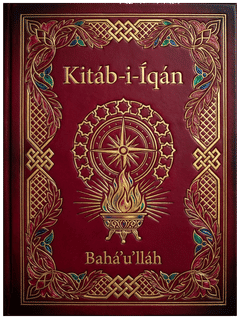
Kitáb-i-Íqán cover

Kitáb-i-Íqán

Bahá’u’lláh

The principal doctrinal work of the Faith, revealed in Baghdad within the space of two days and two nights in response to questions from the Báb’s maternal uncle. Shoghi Effendi described it as occupying a position unequalled by any work except the Kitáb-i-Aqdas — a model of Persian prose, at once original, chaste, vigorous, and remarkably lucid.

291 ¶

Prayers and Meditations cover

Prayers and Meditations

Bahá’u’lláh

Published in 1938, this companion volume to Gleanings contains 184 prayers and meditations selected by Shoghi Effendi from Bahá’u’lláh’s devotional writings revealed across successive exiles from Baghdad to ‘Akká. Shoghi Effendi described it as a volume whose perusal would deepen the spirit of devotion and faith.

858 ¶

Tablet of Aḥmad cover

Tablet of Aḥmad

Bahá’u’lláh

Revealed in Adrianople and addressed to a believer named Aḥmad, this Tablet has been invested by Bahá’u’lláh with a special potency and significance. Its central imagery draws on the metaphor of fire and water: “Be thou as a flame of fire to My enemies and a river of life eternal to My loved ones.”

17 ¶

Tablet of Carmel cover

Tablet of Carmel

Bahá’u’lláh

Revealed during a visit to Mount Carmel, this Tablet addresses the mountain directly and prophesies its future as the world spiritual and administrative center of the Faith. Shoghi Effendi designated it one of three foundational Charters. Its imagery of the Ark and the dwellers therein prefigures the Universal House of Justice.

5 ¶

Tablet of the Holy Mariner cover

Tablet of the Holy Mariner

Bahá’u’lláh

Chanted aloud in the outskirts of Baghdad just weeks before the Declaration in the Garden of Riḍván, its gloomy prognostications aroused the grave apprehensions of all who heard it. Only the Arabic portion has an authorized translation; the Persian portion remains untranslated.

57 ¶

The Hidden Words cover

The Hidden Words

Bahá’u’lláh

Seventy-one Arabic and eighty-two Persian aphorisms revealed around 1858 while walking along the banks of the Tigris in Baghdad. Originally designated the “Hidden Book of Fáṭimih,” Shoghi Effendi described it as a marvelous collection of gem-like utterances occupying a position of unsurpassed preeminence among the ethical writings of the Faith.

160 ¶

Will and Testament cover

Will and Testament

‘Abdu’l-Bahá

Written by ‘Abdu’l-Bahá in three parts between 1901 and 1908, opened and read after His passing on 28 November 1921. Shoghi Effendi designated it the Charter of the New World Order — the mightiest instrument forged to ensure the continuity of the three ages of the Bahá’í Dispensation.

59 ¶